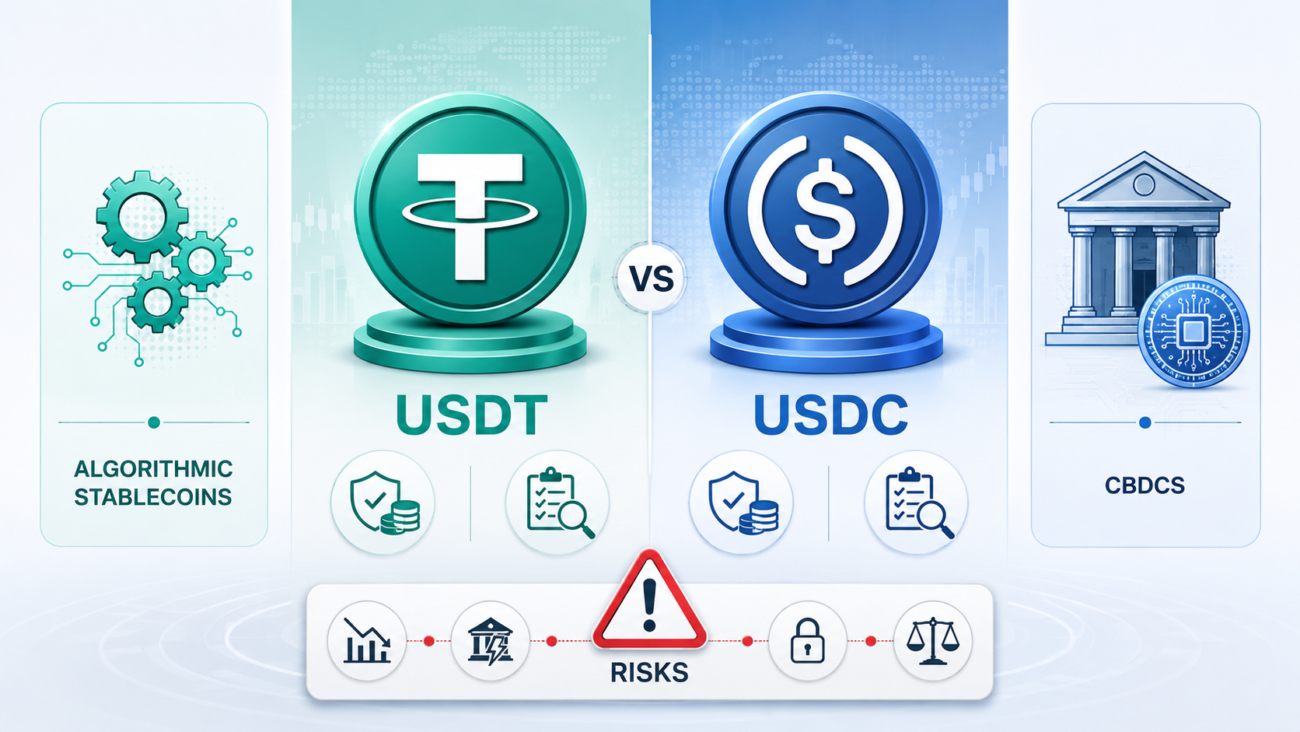
Stablecoins USDT vs USDC Algorithmic Stablecoins CBDCs Stablecoin Risks
If you have spent any time in the cryptocurrency space, you already know that volatility is the name of the game. Bitcoin can surge 10% in a day, while altcoins routinely experience double-digit swings. Enter stablecoins: the financial bridge that combines the speed and borderless nature of blockchain technology with the price stability of traditional fiat currencies.
For modern investors, understanding the complete landscape of Stablecoins: USDT vs USDC, Algorithmic Stablecoins, CBDCs, Stablecoin Risks is no longer optional—it is a critical requirement for surviving and thriving in the digital economy.
Whether you are looking to park your trading profits, send money overseas, or simply explore decentralized finance (DeFi), you need a reliable medium of exchange. In this comprehensive guide, we will break down everything you need to know about the digital dollar ecosystem.

The Heavyweights: USDT vs. USDC
When looking for the best stablecoins on the market, two names dominate the conversation: Tether (USDT) and USD Coin (USDC). Both are pegged 1:1 to the US Dollar, but their underlying structures and corporate philosophies differ significantly.
Understanding the Key Differences
A thorough stablecoins comparison must begin with how these digital assets are backed. Both are technically fiat-backed stablecoins, meaning the issuing companies claim to hold traditional assets (like cash, treasury bills, and commercial paper) in reserve to match the circulating supply of tokens. However, the difference between fiat-backed and crypto-backed assets is only part of the story; the real debate lies in corporate transparency.
When conducting a Tether vs USD Coin transparency comparison, USDC—issued by Circle—has traditionally been viewed as the more compliant and transparent option. Circle publishes monthly attestations from top-tier accounting firms detailing their cash and short-term US Treasury reserves.
Tether (USDT), on the other hand, boasts the largest market cap and the highest trading volume in the world. It is the undeniable king of crypto liquidity. Yet, Tether has historically faced criticism and regulatory scrutiny over the exact composition of its reserves, though it has made significant strides in recent years by shifting heavily into US Treasury bills and publishing quarterly attestations.
Takeaway: If you prioritize deep liquidity across almost every centralized and decentralized exchange, USDT is the default choice. If strict regulatory adherence and transparency are your top concerns, USDC is widely considered the safer bet.

Beyond Fiat: Algorithmic and Crypto-Backed Stablecoins
Not all stablecoins rely on dollars sitting in a traditional bank account. The decentralized finance (DeFi) movement birthed a new era of stablecoins designed to operate without a centralized issuer.
Crypto-Backed Stablecoins
Crypto-backed stablecoins use other cryptocurrencies as collateral to maintain their peg. Because cryptocurrencies are volatile, these systems require over-collateralization. For example, to mint $100 worth of a crypto-backed stablecoin, you might need to lock up $150 worth of Ethereum. This buffer protects the system from sudden market drops, ensuring the market stability of over-collateralized digital assets.
Algorithmic Stablecoins Explained
Algorithmic stablecoins operate differently. Instead of relying on a vault of assets, they rely on code. Understanding how algorithmic stablecoins maintain their peg requires looking at smart contract incentives. Essentially, these algorithms automatically expand or contract the token’s circulating supply based on market demand. If the price goes above $1, the algorithm mints more tokens to increase supply and lower the price. If it drops below $1, it incentivizes users to burn tokens, reducing supply to push the price back up.
However, this model is highly experimental. The best way to understand this is through a comparison of DAI vs LUNA stability models:
- DAI (MakerDAO): DAI is a premier example of a decentralized, crypto-backed stablecoin. It maintains its $1 peg through heavy over-collateralization of assets like ETH and wrapped Bitcoin. If the collateral’s value drops too low, the protocol automatically liquidates it to keep DAI fully backed.
- UST (Terra/LUNA): TerraUSD (UST) was an algorithmic stablecoin that relied entirely on an arbitrage relationship with its sister token, LUNA. It had no external collateral backing it. When market panic set in during 2022, the algorithm failed, leading to a “death spiral” that wiped out tens of billions of dollars.
The Government’s Response: CBDCs
While the private sector innovates, global governments are not sitting idle. Enter Central Bank Digital Currencies (CBDCs).
Central Bank Digital Currency vs Private Stablecoins
A CBDC is a digital form of a country’s fiat currency, issued and regulated directly by the nation’s central bank (like the Federal Reserve or the European Central Bank). The debate of Central Bank Digital Currency vs private stablecoins comes down to centralization and privacy. Private stablecoins (like USDC) run on public blockchains like Ethereum, offering global access and integration into decentralized applications. A CBDC, conversely, runs on a private, government-controlled ledger.

How CBDCs Will Change the Financial Landscape
The impact of CBDCs on traditional banking systems could be monumental. Currently, commercial banks act as intermediaries between the central bank and the public. A retail CBDC could allow citizens to bank directly with the central bank, potentially bypassing commercial retail banks altogether. While this could make distributing stimulus checks or executing monetary policy incredibly efficient, it raises valid concerns regarding government surveillance and the potential restriction of funds.
Navigating Stablecoin Risks
While stablecoins are less volatile than Bitcoin, they are not risk-free. Anyone holding digital dollars must understand and mitigate stablecoin risks to protect their capital.
1. De-pegging Events
The primary danger is the loss of the 1:1 price peg. The risks of stablecoin de-pegging events are severe; if a coin drops to $0.90 or lower and cannot recover, holders lose a significant portion of their purchasing power. This usually happens due to a loss of market confidence or a run on the reserve assets.
2. Smart Contract Vulnerabilities
For decentralized options, you are trusting code rather than a corporation. The smart contract risks in decentralized stablecoins are ever-present. If there is a bug or a loophole in the protocol’s code, malicious hackers can exploit it to drain the collateral backing the stablecoin, rendering the issued tokens worthless.
3. Lack of Transparency
For centralized stablecoins, the risk is opacity. This is why proof of reserves and collateralization audits are so vital. Without independent third-party audits confirming that the cash actually exists, users are forced to trust the word of the issuing company—a dangerous game in the crypto industry.
The Utility of Stablecoins in the Modern Economy
Despite the risks, the benefits of digital dollars are undeniable, and their adoption continues to skyrocket.
Fueling the Crypto Ecosystem
The role of stablecoins in crypto liquidity cannot be overstated. They act as the primary trading pairs on major exchanges. Instead of trading Bitcoin directly for a lesser-known altcoin, traders use stablecoins as a frictionless intermediary asset. Without them, the DeFi ecosystem would grind to a halt.
Revolutionizing Global Payments
Outside of trading, the benefits of using stablecoins for cross-border payments are actively disrupting the remittance industry. Sending money internationally via traditional banks can take days and cost upwards of 5-10% in fees. Sending a stablecoin like USDC over a low-cost network like Solana or Polygon takes seconds and costs fractions of a cent, making it a game-changer for gig workers and immigrants sending money home.

Regulation and the Road Ahead
As the market cap of stablecoins grows into the hundreds of billions, governments are aggressively stepping in. The future of stablecoin regulation in the US is currently taking shape through various legislative proposals aimed at bringing stablecoin issuers under a regulatory umbrella similar to traditional banks.
In the near future, strict regulatory compliance for stablecoin providers will likely become the global standard. Issuers will be forced to hold specific types of highly liquid assets, undergo mandatory audits, and enforce strict Anti-Money Laundering (AML) and Know Your Customer (KYC) protocols. While this may stifle some innovation, it will ultimately provide the consumer protection needed to bring trillion-dollar institutional capital into the market.
Actionable Tips: Protecting Your Stablecoin Holdings
Now that you understand the mechanics and risks, how do you actually protect your funds? It starts with where you store them.
Here is a brief guide on how to choose a secure stablecoin wallet:
- Hardware Wallets: For long-term savings, cold storage hardware wallets (like Ledger or Trezor) are unmatched. They keep your private keys entirely offline, eliminating the risk of digital hacks.
- Self-Custody Hot Wallets: For active DeFi users, non-custodial software wallets (like MetaMask or Trust Wallet) are great. Just remember, you are your own bank. Never share your seed phrase.
- Avoid Centralized Exchanges for Savings: Do not leave your life savings on an exchange. As the collapse of FTX proved, if you don’t own the private keys, you don’t truly own the crypto.
- Diversify: Do not put all your capital into a single stablecoin. Split your holdings between highly audited centralized coins like USDC and robust over-collateralized decentralized options like DAI.
Conclusion
Stablecoins are the unsung heroes of the cryptocurrency revolution. They provide the necessary calm in a sea of digital volatility, enabling frictionless global payments, complex DeFi applications, and deep market liquidity. However, from the opacity of centralized reserves to the experimental nature of algorithmic alternatives, they require careful navigation.
By understanding the differences between USDT and USDC, learning the mechanics of crypto-backed assets, and preparing for the inevitable rise of CBDCs, you can safely leverage digital dollars to your advantage. Stay vigilant, prioritize transparency, and always practice secure self-custody to protect your financial future.
